Listen
Read the weight, space, rhythm, tension, and emotional structure already present in the music.

時流をなぞらない。
今を穿つ。
Leave imitation behind.
Go beneath the present.

Born in a place with little to imitate, Hiroshi Fukuma built a practice around listening, imagination, and completion.
The work begins with the weight of a track, the space around a voice, the breath of a loop, and the image still hidden inside the sound.
Not to reproduce the surface of what already worked, but to go beneath the present and give form to what is not yet visible.
The past explains where the work began. The future defines where it moves.
Hiroshi Fukuma is a Tokyo-based producer, A&R, visual director, and founder of Nipponeer Records. He leads production, A&R and visual direction for The Darrow Chem Syndicate.
He connects music production, A&R, cover art, Spotify Canvas, motion design, metadata, release narratives, and visual identity as one release system.
The work is music-led. It begins with listening and ends with delivery.
I began in print and prepress in the 1990s, working with drum scanning, CMYK color separation, retouching, and early Photoshop workflows. That production discipline still shapes how I work today — from tonal balance and color accuracy to texture, detail, and final output.
Over the years, my work moved from CMYK print production through Y2K-era digital design into RGB motion graphics, streaming visuals, and AI-assisted production. The tools changed; the standard did not.
Today, I combine modern generation tools with human-directed motion design and frame-accurate finishing. The analog character in my work does not come from retro filters alone — it comes from years of working with physical print, scanning, color separation, retouching, and image reproduction before everything became RGB.
Print → Prepress → Digital → Motion → Streaming → AI-assisted production
The work does not begin with a template.
It begins with the weight of a bassline, the silence around a vocal, the pressure inside a rhythm, and the image hidden inside a loop.
Read the weight, space, rhythm, tension, and emotional structure already present in the music.
Translate sound into motion rather than forcing it into a pre-existing visual treatment.
Connect music, artwork, Spotify Canvas, moving image, DSP metadata, credits, contractual documentation, and release context.
Make the judgment, deliver the work clearly, and preserve an accurate record of the process.
Track pressureVisual motionRelease contextEight-second decision
Just proof, taste, judgment, and delivery.
In this field, credentials do not move the image. Listening does. Judgment does. Delivery does.
The question is simple: can you hear the depth of a track, translate it into motion, and make eight seconds feel inevitable?
Hiroshi works across a solo-run label, production, A&R, visual direction, editing, and metadata architecture.
This does not reject collaboration. It keeps the sound, image, language, and release context inside the same world.
Listen deeply. Build precisely. Deliver clearly. Leave a record.
Leave imitation behind. Go beneath the present.
To make something look current is often to repeat a version of the present that has already been defined by someone else.
The work is not anti-technology and it is not anti-trend.
Current tools are used wherever they are useful.
Judgment is not outsourced to them.
The aim is not to make work that merely looks contemporary.
The aim is to give the present an appropriate form.
Not made to look current. Made to exist now.
Music, artwork, motion, credits, metadata, contractual records, and release context are treated as connected parts of the same work.
A release does not end with an audio file.
It includes how the work is seen, identified, credited, delivered, documented, and remembered.
Nipponeer = Nippon + Pioneer.
Japan-based, not Japan-bound.
Not nostalgia. Not a decorative Japan label. A name for building outward from Japan.
Sound, motion, language, and release identity carried beyond the domestic loop.
Nipponeer Records is an independent label and connected creative practice founded by Hiroshi Fukuma.
The Darrow Chem Syndicate is the music project led by Hiroshi Fukuma as producer, A&R and visual director, through which that approach is expressed across sound and image.
Sacred × Surgical. Mechanical tension. Emotional weight.
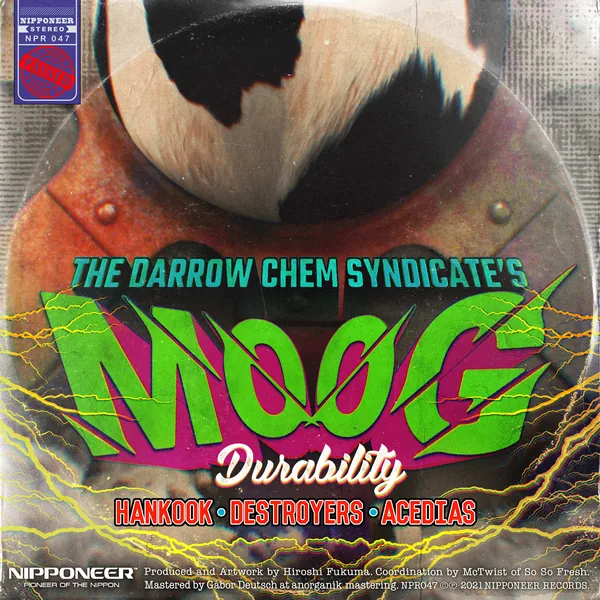
The Darrow Chem Syndicate. The Darrow Chem Syndicate. Industrial-surrealist Canvas built around 60s/70s Moog synthesizer culture, deep heavy bass, industrial imagery, chromatic aberration, VHS distortion, and platform-native 8-second composition.
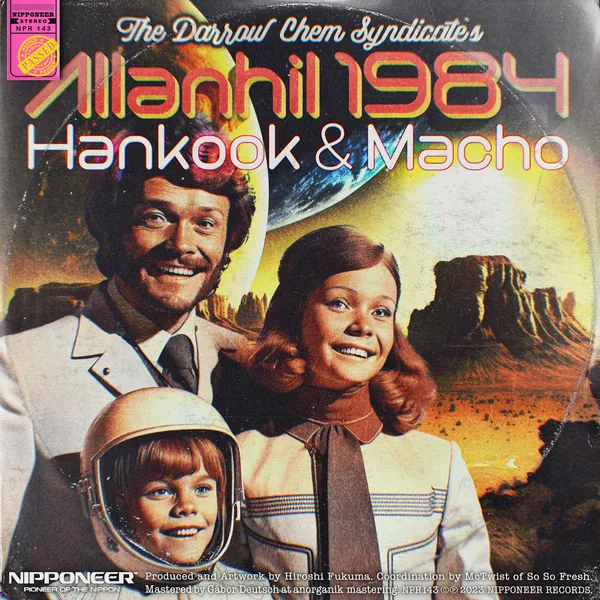
The Darrow Chem Syndicate. A retro-futuristic vertical loop combining 70s-style space-age portraits, alien landscapes, rapid cut-up sequencing, chromatic interference, simulated film burns, VHS tracking damage, and corrupted-broadcast textures.
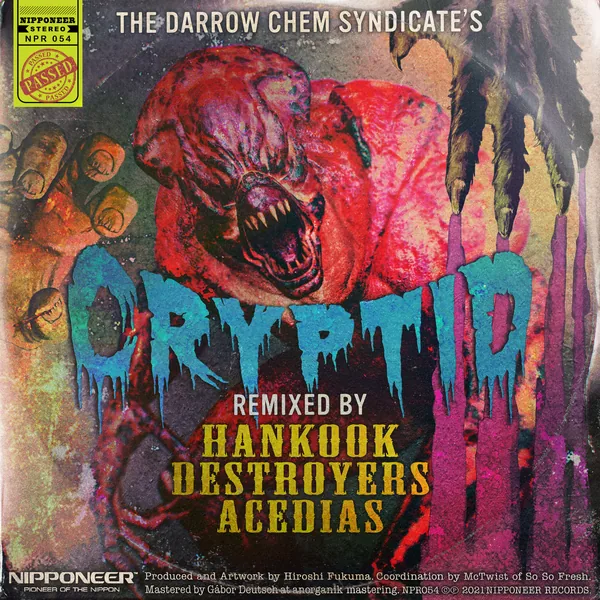
The Darrow Chem Syndicate. A cinematic sci-fi horror Canvas built around a distressed figure behind a glowing dimensional barrier, aggressive breakbeat timing, icy-to-fiery colour shifts, VHS distortion, and tactile analog degradation.
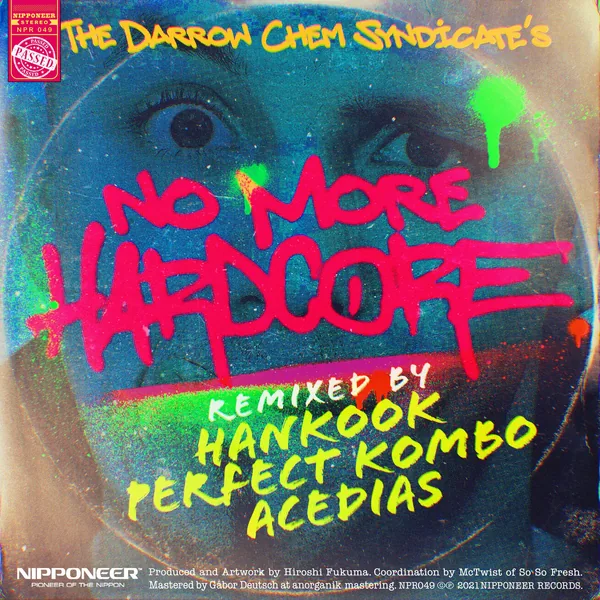
The Darrow Chem Syndicate. An aggressive cyber-glitch Canvas tied to serious bass funk pressure, harsh color inversions, VHS distortion, rapid cuts, and the NPR049 release record.
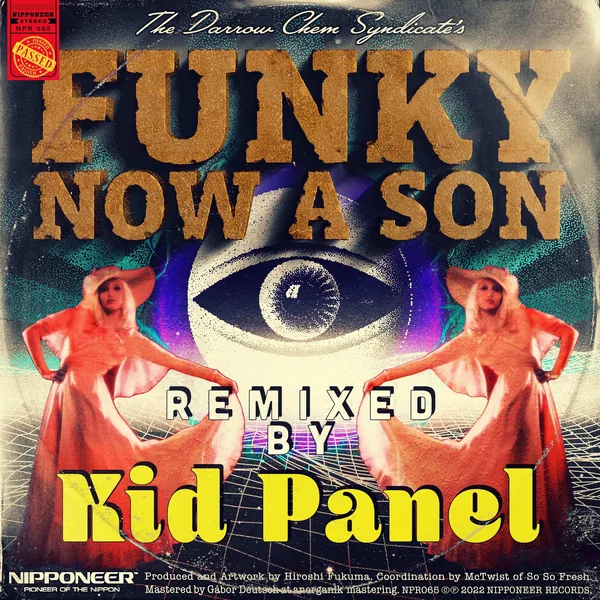
The Darrow Chem Syndicate. Retro-glitch Canvas work tied to heavy bass breakbeat pressure, VHS damage, chromatic flashes, and rapid cut-up transitions.
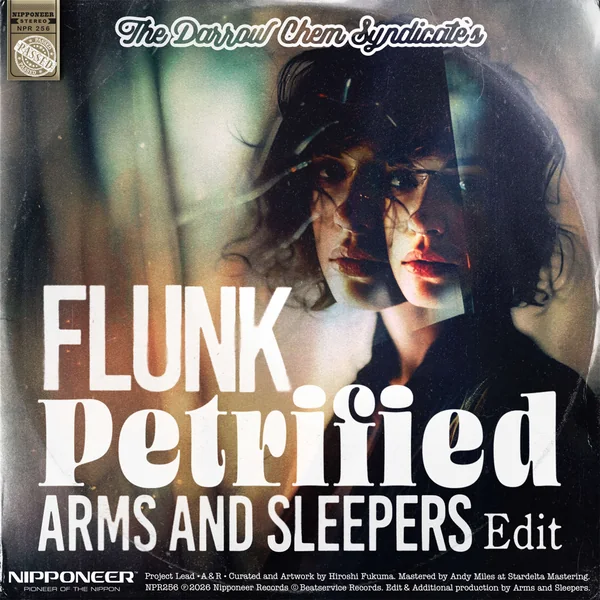
Flunk | Arms and Sleepers | The Darrow Chem Syndicate. A darker, noir-leaning release-linked Canvas built around restraint, atmosphere, artisan photo animation, and slow-pressure breaks.
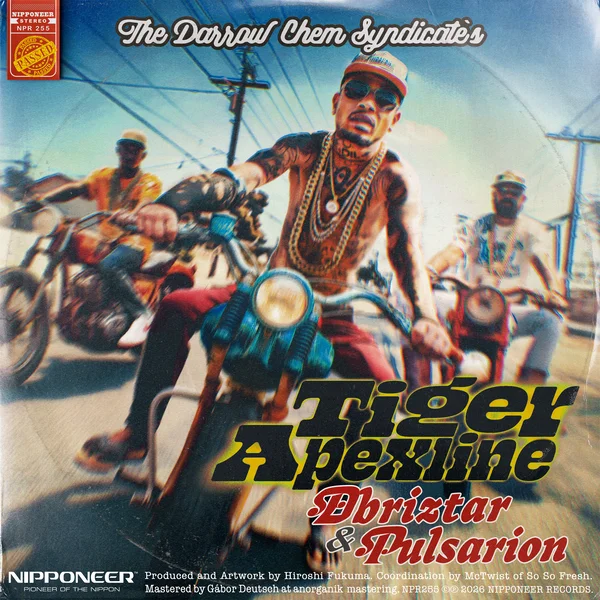
The Darrow Chem Syndicate. High-velocity industrial breakbeat identity using layered source assets, manual compositing, parallax, and street-cinematic motion.
Hiroshi Fukuma is listed on SoundBetter as a Spotify Canvas Designer in Tokyo, Japan.
Not a trophy. A visible professional signal.
Not self-declared. Visible through the work.
For delivery specs, current rates, the Japanese FAQ, the multilingual FAQ, and booking context, use the dedicated Spotify Canvas Designer page.
Eight-second vertical loops built from sound, artwork, live-action footage, portraits, supplied material, or original visual concepts. See the dedicated Spotify Canvas Designer page.
Cover artwork, animated variations, reels, short-form motion, and promotional assets developed inside one release world.
Mood, pacing, color, footage, composition, typography, and asset direction shaped around the identity of the music.
Release visuals, metadata, credits, and delivery context shaped as one package from the practical perspective of an independent label.
Spotify CanvasCover artMotion identityVisual directionRelease packaging
The past explains where the work began.
It does not define where it ends.
Beneath the present.